


Heart & Cardiovascular Monitoring
Keep a Closer Watch on Cardiovascular Health

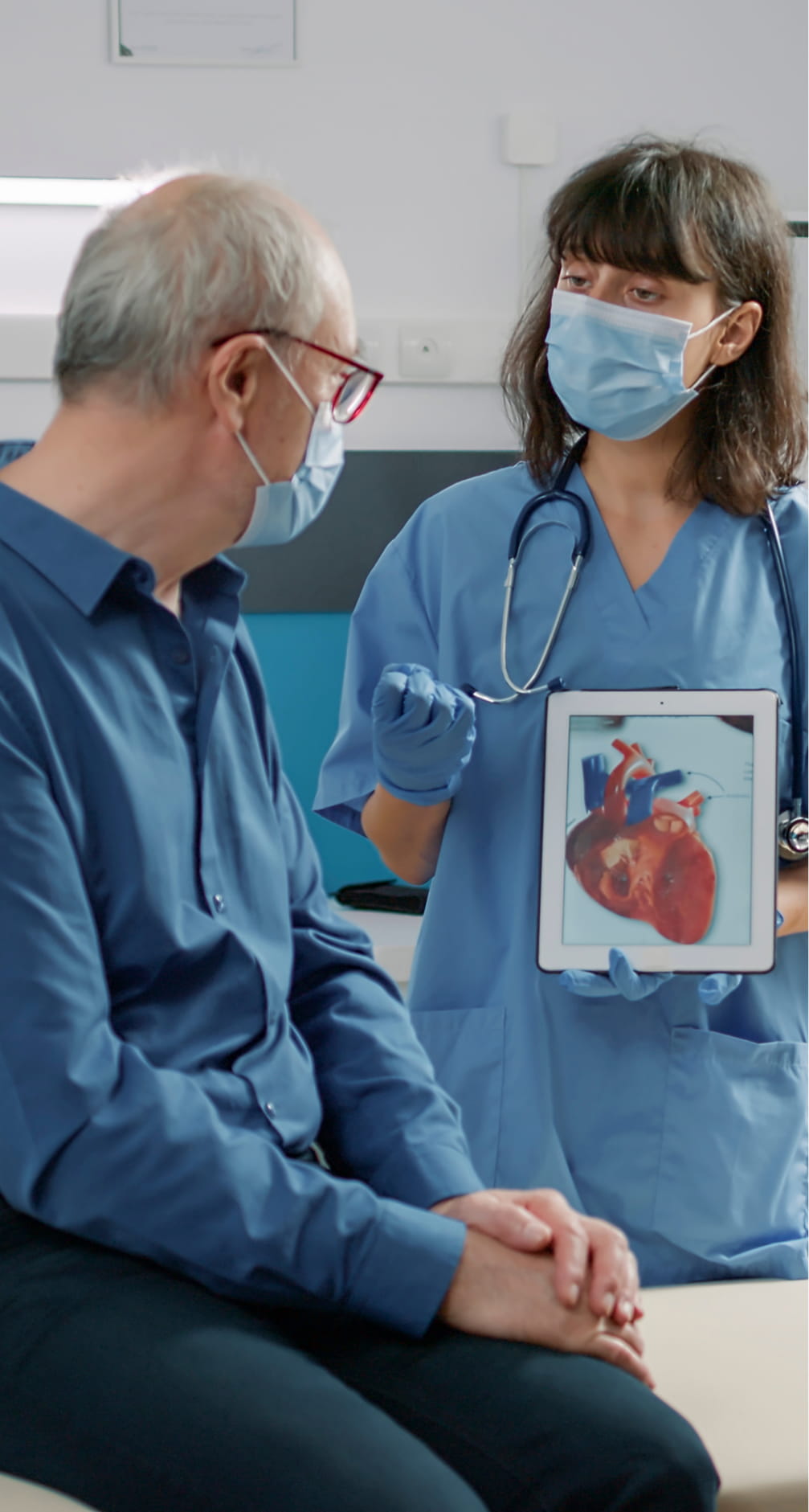
Cardiovascular Care With Valuable Context
A More Complete View of Your Heart Health
Blood Pressure Tracking
Repeated measurements can provide a clearer understanding of your blood pressure than relying on a single reading and can help guide hypertension management when needed.
Cardiovascular Risk Assessment
Your physician can consider factors such as medical history, family history, laboratory findings, diabetes, metabolic health, and other relevant risks as part of your cardiovascular care.
Circulation Evaluation
Changes in circulation can provide important information about vascular health. Appropriate evaluation can help determine whether symptoms or findings require additional investigation.
Connected Follow-Up
When results raise a concern, your CWC physician can help determine the next step and coordinate additional testing or specialty care when appropriate.
Reviews & Testimonials
I’m happy with this Practice. Dr. Choi always teaches me something every time I go! The staff tries to make you comfortable and get things rolling to help you get to your specialists if you need to be referred on. Always 5 stars … for sure ,& if it’s not right call them and they will fix it!

Dr Choi is one of the best doctors we have seen in my life. Dr. Choi hasn't just been just our doctor; they've become a trusted advisor and advocate for our family's health journey. If you want healthcare that feels personal, proactive, and truly centered around you and your family's unique needs, a top-tier concierge doctor like this is transformative. We feel incredibly fortunate and couldn't recommend this level of care more highly.
Always a great experience! My wife and I have been thrilled with the entire team at Concierge Wellness. Dr Choi's support team is super efficient, friendly and responsive. They have even called our pharmacy to speed things up. Great service! And Dr Choi has been amazing. As I've started exploring longevity, Dr Choi has gone way beyond offering the basics of medical care -- he discusses issues in depth and has really helped learn about the details.
I followed Dr. Catherine Nguyen-Ward to her concierge practice without hesitation, and I’d do it again in a heartbeat. Not only is she exceptionally well-versed and competent across many areas of medicine, but, most importantly, she listens. I mean, she really listens. She understands what’s wrong almost immediately and takes decisive action to get you well, fast. No guesswork. No unnecessary, endless visits or lab work that lead nowhere. She is incredibly smart and truly a rare kind of physician in this day and age. In a healthcare landscape that often lacks compassion and is filled with rushed, impersonal, and ineffective care, she stands out as exceptional. In this town, she is simply unmatched. Finding her a few years ago, was a game-changer.
The staff is polite, focused and provides the best service. Dr. Choi is always interested in understanding and recommending the absolute best medical solutions for my personal long term health! Dr.VJ is a real asset to the office, a very thoughtful highly experienced doctor with a depth of compassion. I greatly appreciate the care and attention from these doctors and staff.
Changing from my previous primary to Dr. Choi is the best decision I've made for my well being! Dr Choi & his entire crew are wonderful & attentive. Great practice with ever evolving options on wellness & health in general. Thank you!
Both experiences (last Wednesday,11/19/2025’s being my initial meeting) with Dr Ward could not have been more satisfactory. The circumstance was an emergency situation that could have gone quite differently. Dr Ward and all the office crew came through swiftly, professionally, and skillfully-everything I’ve come to expect from Dr Choi and his team. I cannot speak more highly of the care they afforded me. I think they earned TEN stars out of five!
Christopher Choi MD at Concierge Wellness provides excellent personalized medical service. He also has a wonderful referral network of physicians and medical facilities. I would strongly recommend him.
We’ve been patients of Dr. Choi for several years now, and it has truly been a blessing. One of the things that stands out most is having such direct access to both Dr. Choi and his staff. They are always attentive and responsive. Dr. Choi takes the time to explain things clearly and always works with our busy schedules. His dedication and personal approach set him apart from other doctors. We feel fortunate to have found Dr. Choi and his team.
I couldn’t be more grateful for the care I receive from Dr. Choi and the entire team at Concierge Wellness & Aesthetics. From the moment I walk in, I feel truly heard, respected, and cared for. The doctors and staff take the time to listen, explain everything clearly, and never make the appointment feel rushed. It’s rare to find a practice that blends top-tier medical expertise with such warmth and compassion. I feel incredibly fortunate to have found Dr. Choi—this level of care truly makes all the difference.
Dr. Choi and his staff are wonderful! I have been seeing him for many years and have recently started trying some of the new offerings.The Emsella treatment for pelvic conditioning has given wonderful results. It is a modern miracle. Doctor Choi is so brilliant in medicine! Highly Recommended. Wish I could give a hundred stars🌟
I have lived in Las Vegas since 1980. I was lucky enough to find a good doctor early on, and stayed with him for about 5 years, until he retired. After that, it was hit and miss for a number of years. Luckily, I was young and healthy, so an annual visit to a doctor was all I needed. As Vegas grew, finding a good doctor became more difficult. Too many people, not enough doctors to go around. I remember sitting in one doctor's crowded waiting room for more than an hour past my appointment time. And when I asked for the flu shot, the main reason I was there, she said she did not have any. A member of her staff had forgotten to put them in the fridge, and all had to be tossed out. Luckily a few years ago, my neighbors told me about Dr. Choi. I was unfamiliar with the concept of concierge medicine, but it makes so much sense. There is no crowded waiting room full of sick people, and my time with the doctor is not rushed. He sees me on a regular basis throughout the year. Two years ago, I developed a serious condition related to long term use of Fosomax. Although it was a dental issue, Dr. Choi is the one I immediately turned to for help. He prescribed a treatment that has stabilized my condition to this day. We are so lucky to have Dr. Choi in Las Vegas.
Dedicated Care With Direct Access

Any Questions?
Blood pressure monitoring can be an important part of cardiovascular care. Tracking readings over time allows your physician to evaluate patterns and determine whether lifestyle measures, medication management, further evaluation, or other steps may be appropriate.
Yes, when medically appropriate. An EKG records the heart's electrical activity and can provide information about heart rate and rhythm. CWC currently includes EKG testing within its comprehensive annual physical process.
No. Monitoring may also be appropriate for people who have cardiovascular risk factors without a diagnosed heart condition. Your personal and family history, blood pressure, metabolic health, diabetes status, laboratory results, and other factors can help determine whether closer observation is appropriate.
When specialized cardiovascular evaluation is appropriate, your CWC physician can help coordinate the next stage of care. Relevant medical information and results can be shared with the specialist, while your concierge physician remains involved in your broader health management and follow-up.
Heart and cardiovascular monitoring can help your physician recognize changes in blood pressure, cardiovascular risk factors, circulation, or other relevant findings. It may also help determine when a new symptom or abnormal result deserves additional evaluation.
Tell your physician about new or changing symptoms rather than waiting for a routine follow-up. Symptoms such as chest discomfort, unusual shortness of breath, dizziness, fainting, palpitations, or significant changes in exercise tolerance can require medical evaluation. Severe or sudden symptoms may require emergency care.
Early detection helps identify risk factors before they progress into more serious long-term complications.
