

Is Your Smartwatch Enough for Heart Monitoring, or Do You Need a Doctor's Checkup?
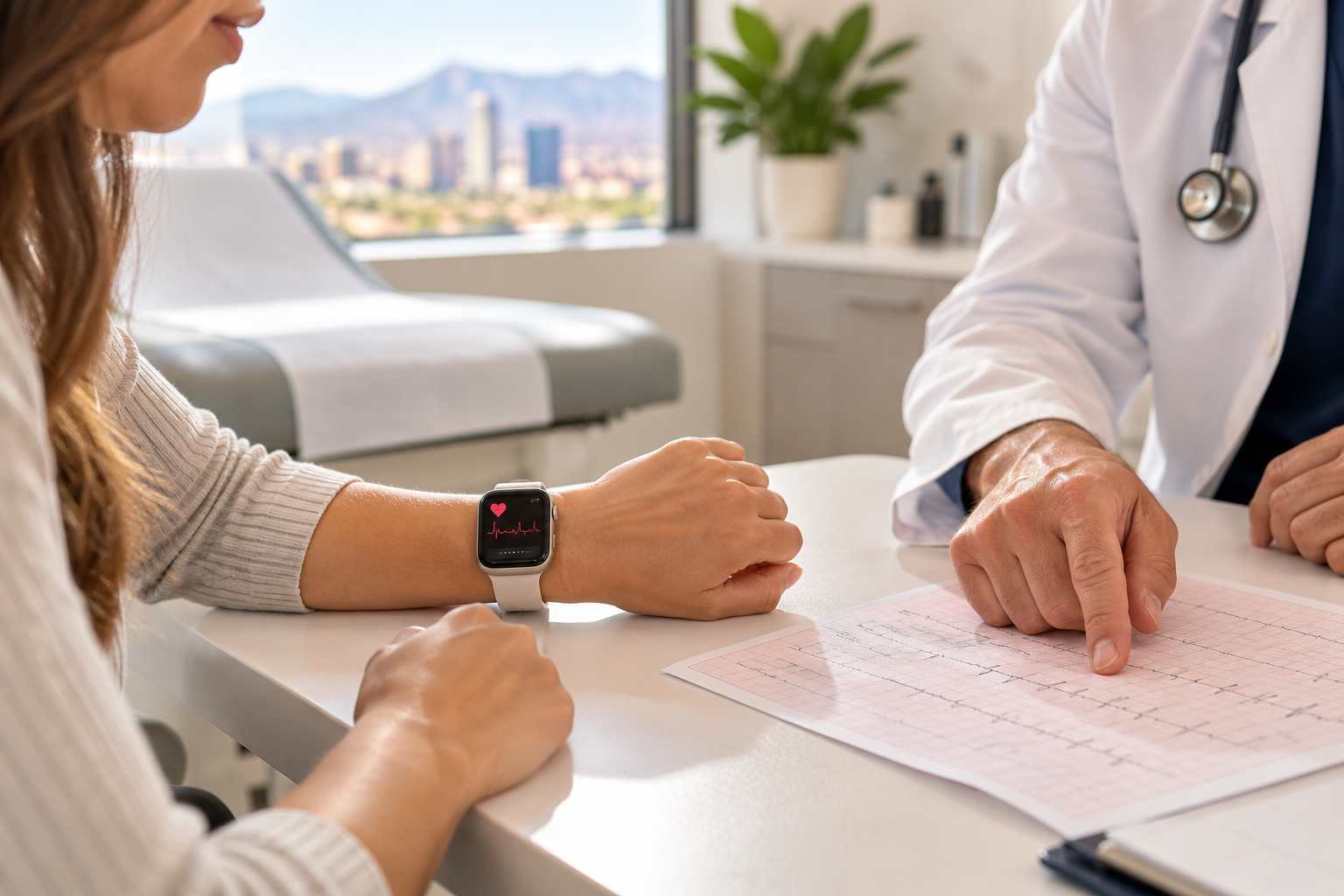
A smartwatch is a useful early warning tool, but it is not a complete heart checkup. Wearables can track heart rate trends and, on some models, record a single-lead ECG or flag a possible irregular rhythm. They cannot measure your cholesterol, blood sugar, or (on most devices) blood pressure, and they cannot rule out heart disease. The smartest approach is to use your watch for awareness and a physician for answers.
Millions of people now wear a heart monitor on their wrist every day. That is a good thing. It also creates two new problems: people who panic over every alert, and people who assume a quiet watch means a healthy heart. This guide explains what consumer wearables can and cannot tell you, and how heart monitoring in Las Vegas fits into a more complete picture at Concierge Wellness & Aesthetics.
What Can a Smartwatch Actually Measure?
Most wearables use optical sensors on the back of the device to estimate heart rate. Depending on the model, they may offer:
- Resting and active heart rate trends
- Heart rate variability
- High or low heart rate notifications
- Irregular rhythm notifications that may suggest atrial fibrillation (AFib)
- A single-lead ECG recorded when you touch the watch's sensor
- Blood oxygen estimates and sleep tracking
These features can be helpful for spotting patterns. A resting heart rate that climbs steadily over several weeks, for example, might reflect poor sleep, dehydration, stress, illness, or something worth checking.
What Are the Limits of Smartwatch Heart Monitoring?
The FDA's review of the Apple Watch ECG app, one of the best-known examples, is a good illustration of the boundaries. The app records a single-channel ECG and classifies it as AFib, normal sinus rhythm, or inconclusive. But the FDA documentation states it is not intended for people under 22, is not recommended for users with other known arrhythmias, and is not intended to replace traditional methods of diagnosis or treatment. Users are not meant to take clinical action based on its results without consulting a healthcare professional.
In practical terms, a wearable generally cannot:
- Detect blocked arteries or confirm that you are not having a heart attack
- Measure cholesterol, blood sugar, or kidney function
- Assess heart valves or heart structure
- Check circulation in your legs
- Replace a full EKG interpreted by a physician
A normal reading on your watch is reassuring information, not a clean bill of health.
Why Can a Quiet Smartwatch Be Misleading?
Some of the most important heart risks produce no symptoms and may not show up on a wrist sensor at all.
High blood pressure is the classic example. The CDC notes that high blood pressure usually has no warning signs, and the only way to know is to measure it. Most smartwatches do not provide clinically validated blood pressure readings.
Atrial fibrillation is another. According to the CDC, some people with AFib have no symptoms at all, yet AFib is associated with a substantially higher risk of stroke. A watch may catch some episodes, but not all of them.
What Does Clinical Heart Monitoring Include?
A physician-guided approach to heart monitoring evaluates your overall cardiovascular health, not just your pulse. Depending on your age, medical history, symptoms, and risk factors, your physician may recommend several assessments to identify potential concerns early.
Common heart monitoring tools and evaluations include:
- Blood Pressure Measurement: Checks for high blood pressure, a major risk factor for heart attacks, strokes, and cardiovascular disease.
- Electrocardiogram (EKG): Records the heart's electrical activity to help identify irregular rhythms and other potential heart abnormalities.
- Lipid Panel: Measures cholesterol and triglyceride levels to assess the risk of plaque buildup in the arteries.
- Blood Sugar or A1C Testing: Helps identify diabetes or prediabetes, both of which can increase cardiovascular risk.
- Ankle-Brachial Index (ABI): Compares blood pressure in the ankles and arms to screen for peripheral artery disease and reduced blood flow to the legs.
- Physical Examination and Medical History: Reviews family history, symptoms, lifestyle habits, and medications to provide a more complete picture of heart health.
At Concierge Wellness & Aesthetics, the annual physical includes a fasting blood draw, EKG, ankle-brachial index assessment, full-body composition scan, spirometry, and full-body ultrasound screening. Your physician then conducts a comprehensive physical examination and reviews your results to help identify potential health concerns.
If additional testing or longer-term heart rhythm monitoring is necessary, your physician may recommend evaluation by a cardiologist. Concierge medicine also supports coordination with specialists, helping you navigate follow-up appointments and maintain continuity of care.
Who Should Pay the Most Attention to This?
If You're in Your 20s
Younger adults are often the most dedicated wearable users, and also the most likely to skip a physician visit. It is common to see a high heart rate alert after energy drinks, vaping, a stressful exam week, or a night out in the heat and assume something is wrong, or to assume nothing could be wrong at 25. Neither assumption is safe. A baseline EKG and blood pressure reading in your 20s gives you something to compare against for decades, and it is a calm way to answer the questions your watch raises.
If You're a Busy, Stressed Professional
For professionals who live on caffeine, travel, and short sleep, wearable data often shows exactly what you would expect: elevated resting heart rate and poor recovery. The useful question is whether that pattern reflects lifestyle strain or something medical. A concierge model with same-day or next-day appointments and telemedicine makes it easier to get that question answered quickly instead of letting it linger for months.
If You're a Man Who Skips Checkups
Men are more likely to delay checkups and to treat the watch as a substitute for a doctor. Many also have risk factors, such as high blood pressure or high cholesterol, that a wearable will never detect. If you are a man over 40, or younger with a family history of early heart disease, clinical screening deserves a spot on your calendar.
What Should You Do When Your Smartwatch Sends an Alert?
- Do not ignore repeated alerts. One odd reading after a workout may be noise. Repeated irregular rhythm notifications are worth a physician's review.
- Save the data. Many devices let you export ECG recordings or heart rate history. Bring them to your appointment.
- Note the context. Were you dehydrated, sick, stressed, drinking alcohol, or using caffeine? This helps your physician interpret the reading.
- Know when it is an emergency. Chest pain or pressure, shortness of breath, fainting, sudden weakness, or confusion means calling 911, regardless of what your watch says.
How Does Concierge Care Support Ongoing Heart Monitoring?
At Concierge Wellness & Aesthetics, heart disease care starts with a detailed assessment of your history, lifestyle, and risk indicators, followed by ongoing monitoring and plans adjusted as your needs change. The practice also supports patients with hypertension, one of the most common and most silent heart risks.
Members benefit from 24/7 physician access, in-house lab testing, and longer visits where you can actually walk through your wearable data instead of rushing past it. For a closer look at why ongoing tracking matters, read our article on why heart monitoring matters more than a once-a-year checkup.
Frequently Asked Questions
Can a smartwatch detect a heart attack?
No consumer smartwatch is designed to diagnose a heart attack. If you have chest pain, pressure, shortness of breath, or other warning signs, call 911 even if your watch shows a normal reading.
Is a smartwatch ECG the same as an EKG at the doctor's office?
No. Most smartwatch ECGs record a single lead, while a clinical EKG uses multiple leads placed on the chest and limbs to view the heart's electrical activity from several angles. A physician interprets the results in the context of your full history.
Should I bring my smartwatch data to my appointment?
Yes. Heart rate trends, saved ECG recordings, and irregular rhythm alerts can give your physician helpful context, especially if symptoms come and go.
How often should I have my heart checked in Las Vegas?
It depends on your age, risk factors, and existing conditions. Many adults benefit from yearly screening as part of an annual physical, while people with high blood pressure, diabetes, or a strong family history may need closer monitoring.
Can young adults have heart problems?
Yes. While heart disease is more common with age, younger adults can have high blood pressure, high cholesterol, rhythm issues, or inherited conditions. Establishing a baseline early helps detect changes sooner.
Your Watch Has Your Wrist. Let Us Have Your Back
Your smartwatch is a great conversation starter about heart health. It just should not be the whole conversation. Pairing everyday wearable data with physician-guided heart monitoring gives you both awareness and clarity.
To schedule an annual physical or visit, or to learn more about concierge medicine in Las Vegas, contact Concierge Wellness & Aesthetics.